
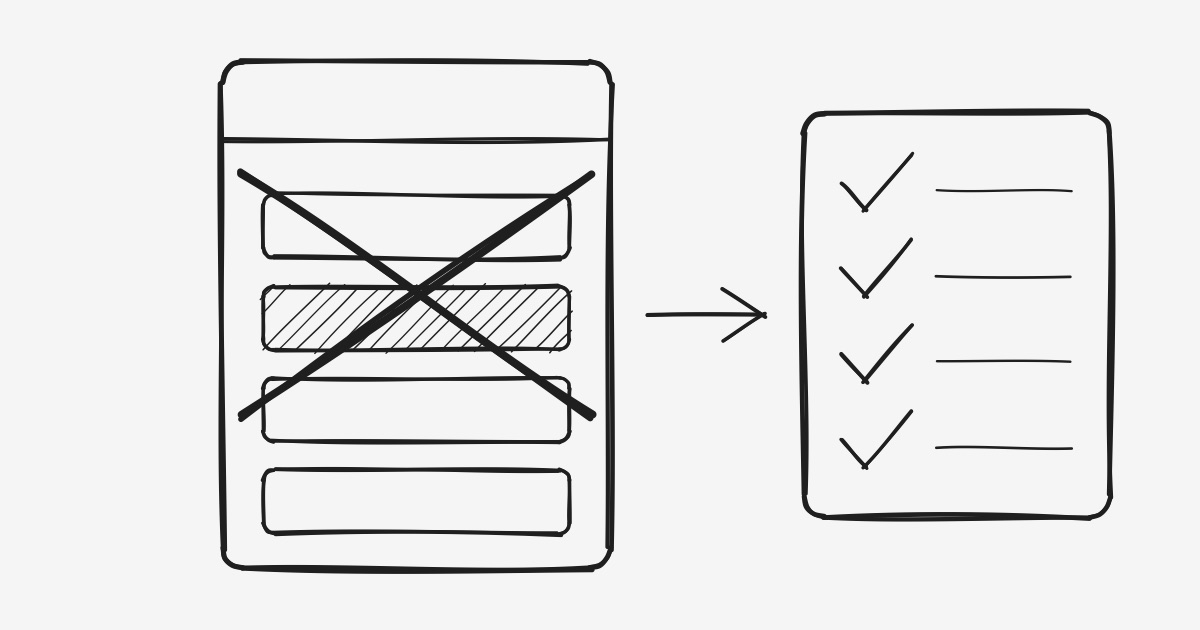
The weekly status meeting is the most reliable meeting in any company. It's also the one nobody defends when asked directly.
That's because it exists for one person's benefit and costs everyone's time. The manager needs to know where things stand — a completely legitimate need. Everyone else takes turns narrating work the other attendees have no use for, waiting for their two minutes.
There's a better trade available. But only if you're honest about what you give up.
Contents
- Who the meeting is actually for
- What it costs
- The replacement
- What you genuinely lose
- How to run the switch
- FAQ
- Conclusion
Who the meeting is actually for
Watch a status meeting and count who is listening. Six people in the room, one speaking, and of the five remaining, one is preparing their own turn and four are elsewhere.
That's not a discipline problem. It's structural: the information being shared is relevant to the manager and to almost nobody else. Two developers rarely need each other's task list. A designer doesn't need the sales pipeline. The overlap that would justify assembling everyone often doesn't exist.
Which makes the format wrong rather than the meeting wrong. Reporting to one person, one at a time, in front of an audience, is an expensive way to fill in a form.
The honest version of the question isn't "should we cancel the status meeting?" It's "what is the cheapest way for the manager to know where things stand?" Once you ask it that way, the answer stops being a meeting.
What it costs
Six people, one hour, weekly. At a loaded rate of $45 an hour that's $270 a week — about $14,000 a year (check it against your own team), before you count preparation, and before the fragmentation of the day around it.
There's also a cost that doesn't show up as money: a Monday morning meeting takes the best hours of the best day and spends them on reporting. Whatever your team's most valuable work is, it isn't happening between 9 and 10 on Monday.
The replacement
Three pieces, and all three matter — remove one and the need comes back louder.
1. Everyone submits their week. Whatever your team already records — hours, tickets closed, a short written update — gets submitted on a fixed day. If your team already logs time, most of this is done: a submitted week already says which projects the hours went to. What it doesn't carry is judgement, which is what the second piece is for.
2. One short written note per person. Two or three lines, not a report: what moved, what's blocked, what needs a decision. The blocked line is the important one — it's the only part that used to genuinely need an audience, and now it needs a reader.
3. A standing slot the manager can use. Keep the hour in the calendar for a month, and cancel it every week that nothing needs it. The slot's existence is what makes people comfortable dropping the ritual; deleting it outright makes the change feel like something is being taken away.
The manager reads on their own time, replies where a reply is needed, and calls a real meeting for the two things that turned out to need one. Those meetings are short, because they have a subject.
A status meeting answers "what happened." A good written update answers "what needs you." Only the second one is worth six people's Monday morning.
What you genuinely lose
Any article that tells you the switch is free is selling something.
You lose the weak signals. Tone of voice carries information. Someone saying "yeah, it's fine" in a way that clearly means it isn't is the kind of thing a written update erases completely. A manager who relied on the room to notice trouble will notice less.
You lose incidental awareness. People genuinely do pick things up from hearing each other — an overlap nobody predicted, a warning that something is about to collide. Less of that happens when everyone reads separately.
You lose the forcing function. A meeting makes people prepare. A written update that nobody visibly reads gets thinner every week until it's three words and a shrug.
The first two are real costs to accept, and one-on-ones cover most of the first. The third is the one that actually kills the change: if the manager doesn't visibly respond to the written updates, the format dies within a month and the meeting comes back. Replying in writing, even briefly, is not optional — it's the whole thing that keeps it alive.
How to run the switch
- Try it for six weeks, out loud. Say it's a trial. A trial can be reversed without anyone losing face, which makes people willing to try it properly.
- Keep the slot booked, cancel it weekly. See above. The empty slot is a safety net, not a waste.
- Measure both ends. Log meeting time against a single project before and during. If total meeting hours drop and nothing breaks, you have your answer in numbers rather than impressions.
- Ask the quiet people first at the end. The person who benefited most from the meeting is usually the one who found it hardest to interrupt. Check with them directly before declaring success.
- Keep the one-on-ones. If you cut the status meeting and the one-on-ones in the same month, you haven't made the team asynchronous — you've made them invisible to each other.
FAQ
Doesn't this just move the work to the manager?
Somewhat, and that's the correct direction. Reading six updates takes fifteen minutes; assembling six people takes six hours. Moving effort from six people to one is the entire trade.
What about a daily standup?
Same test, different frequency. A standup that's genuinely about unblocking each other is doing real work. One where each person recites yesterday's tasks to a manager is a status meeting held five times a week.
My team is remote across time zones. Does this help more?
Considerably. A live status meeting across time zones is expensive for whoever is furthest from the organiser's clock. Written updates cost the same to everyone.
What if someone stops writing them?
That's information. Usually it means either that nobody reads them, or that the person is stuck and doesn't want to say so in writing. Both are worth a conversation — a real one, live.
Conclusion
The weekly status meeting isn't evil. It's just a very expensive way to answer a question that a written update answers for a fraction of the price.
Replace it with three things — a submitted week, a short written note, and a slot you keep but rarely use — and commit to the part that makes or breaks it: reading the updates and replying where it matters.
Run it for six weeks and measure. If meeting hours fell and nothing broke, you found $14,000 and a Monday morning.
If your team already logs its hours, the first of the three is done. See how submitted weeks and approvals work.