
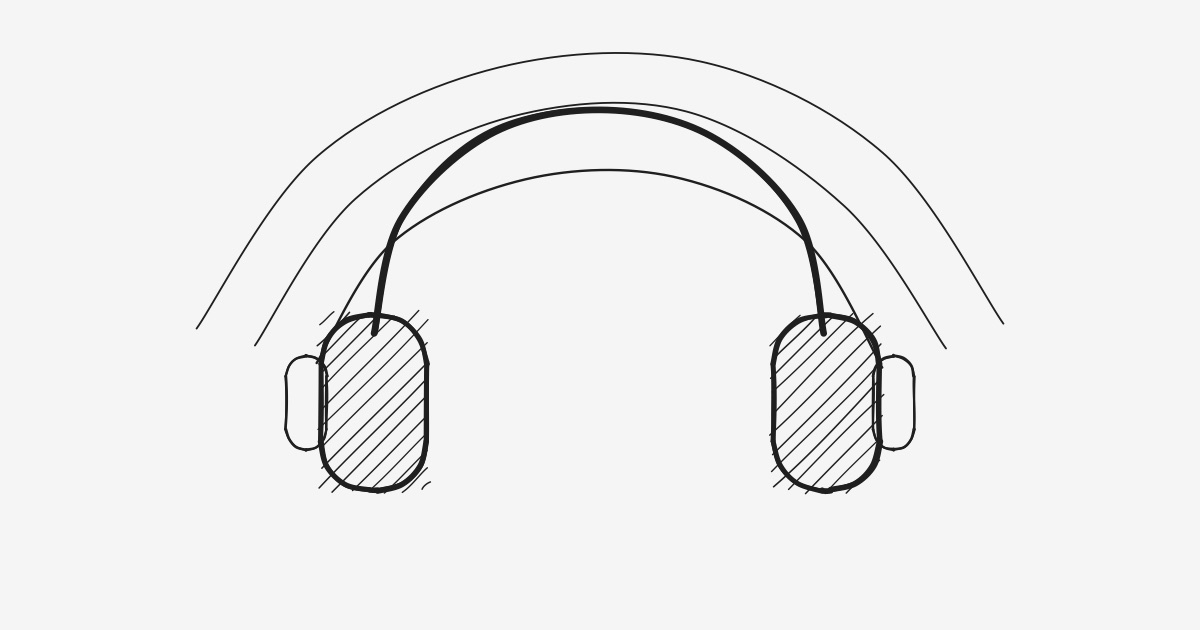
You know those rare moments when time disappears, work truly advances, and you produce in two hours what would normally take a full day? That's deep work.
Popularized by computer scientist and author Cal Newport, the concept contrasts that kind of intense focus with the myriad small, shallow tasks that fill our days. His thesis: in a world saturated with distraction, the ability to work deeply is becoming both increasingly rare and increasingly valuable.
Contents
- What is deep work?
- Deep work vs shallow work
- Why it became rare and valuable
- How to create deep-work sessions
- Four ways to build in deep work
- Deep work and time tracking
- Common mistakes
- FAQ
- Conclusion
What is deep work?
Deep work refers to activities performed in a state of distraction-free concentration that push your cognitive abilities to their limit. These are the tasks that create real value and are hard to replicate: writing, coding, designing, analyzing, learning something complex.
Its key trait: it demands uninterrupted attention. The moment a notification, a message or a "just one second" intrudes, the depth collapses — and it takes long minutes to recover it.
Deep work vs shallow work
Shallow work, by contrast, covers low-cognitive-demand tasks, often done while distracted: answering email, filling forms, attending routine meetings, managing notifications.
- Deep work: high value, hard to replicate, tiring but rewarding.
- Shallow work: low value, easily delegated or automated, deceptively "busy."
The problem isn't that shallow work exists — some is necessary. It's that it colonizes our days and eats the time that should go to deep work.
Why it became rare and valuable
Two forces are at play. On one side, our work environments are built for interruption: instant messaging, open offices, constant notifications. On the other, shallow work gives an illusion of productivity — you're "busy," so you feel effective.
The result: the ability to focus deeply is becoming scarce. And it's precisely that ability which separates remarkable work from average work. Scarcity + value = a considerable advantage for those who cultivate it.
How to create deep-work sessions
- Block dedicated time. Deep work doesn't happen by chance: reserve slots in advance (see time blocking).
- Remove distraction triggers. Phone out of sight, notifications off, tabs closed. The only reliable way not to give in is to make distraction inaccessible.
- Pick a single demanding task. Not three. Depth is incompatible with multitasking.
- Start with realistic durations. 60 to 90 minutes is already demanding. The Pomodoro Technique can help you start, but avoid fragmenting a deep session every 25 minutes.
- Ritualize. Same place, same time, same start signal: the brain learns to switch into focus faster.
Four ways to build in deep work
Newport describes several "rhythms"; choose by context:
- Monastic: cut yourself off for long stretches. Rare and radical.
- Bimodal: alternate dedicated periods (a day, a week) with open ones.
- Rhythmic: one deep-work slot each day, at a fixed time. The most sustainable for most people.
- Journalistic: dive in whenever a gap opens. Effective but takes training.
Deep work and time tracking
Here's an uncomfortable truth: most people massively overestimate their real focus time. You think you "worked 8 hours," when you had 90 minutes of real deep work drowned in shallow work and interruptions.
Tracking your time — and distinguishing deep stretches from the rest — reveals that number. It's often brutal, but it's the starting point for protecting and increasing those rare hours. What you measure, you can improve.
Common mistakes
- Waiting to "have the time." It won't come on its own: you block it.
- Keeping the phone within reach. A smartphone's mere presence reduces focus, even switched off.
- Grinding with no breaks. Deep work is draining; without recovery, quality drops.
- Confusing busyness with depth. An empty inbox isn't an achievement; it's often shallow work disguised as work.
FAQ
How many hours of deep work per day is realistic?
For most people, 2 to 4 hours of deep focus a day is already excellent. Beyond that, quality falls. The goal isn't raw quantity, but consistency.
Are deep work and Pomodoro compatible?
Yes, with nuance: Pomodoro helps you start and structure, but interrupting a true deep session every 25 minutes can hurt. For deep work, prefer longer cycles (50 to 90 minutes).
How do I do deep work in an open office?
Signal your unavailability (headphones, status), block slots the team knows about, and book a room if you can. Otherwise shift your deep stretches to the quietest hours.
Does deep work suit creative tasks?
Yes, especially. Creation demands exactly the uninterrupted immersion that deep work protects.
Conclusion
Deep work isn't just another technique: it's the skill that decides the quality of what you produce. In a world optimized for your distraction, protecting a few hours of deep focus a day is both simple and radical.
Start by blocking a single one tomorrow, phone away, on your most important task. Then measure: how much deep work do you actually do? Puuunch lets you track the time truly spent on each project — turning a good intention into a verifiable habit. See how it works.