
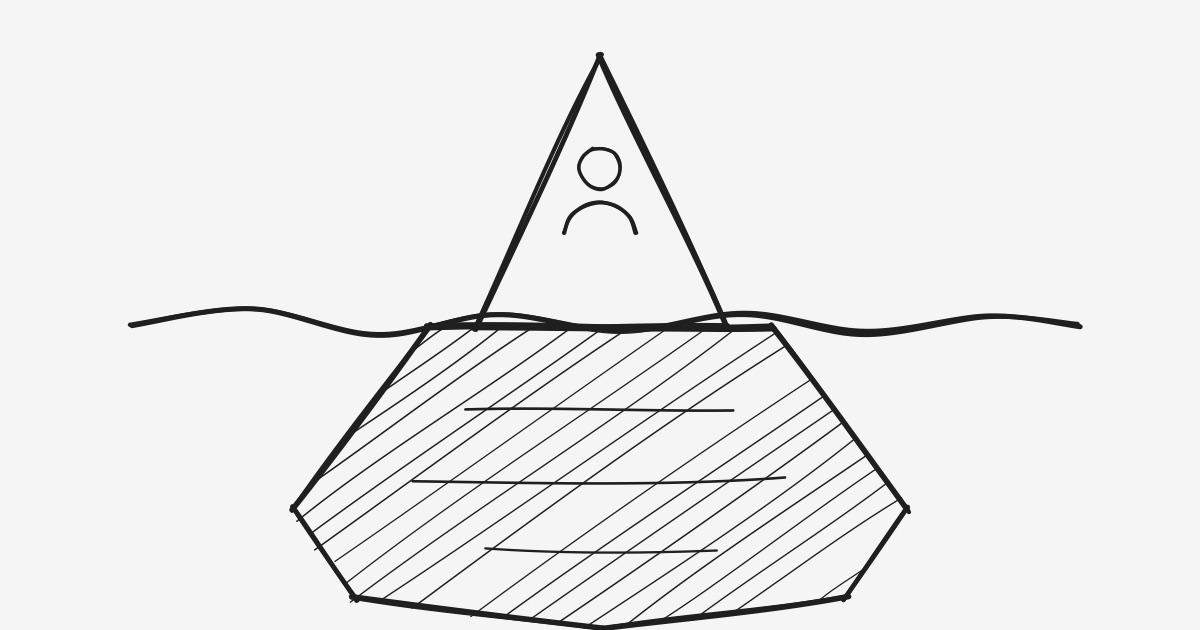
Ask what someone costs and you will usually be told their salary. It is the wrong number, and it is wrong by roughly a tenth — enough to turn a quote that looked comfortable into one that was not.
The gap is not a secret. It is a set of statutory contributions an employer pays on top of the salary, every one of them published, none of them optional. What makes them easy to forget is that they never appear on the offer letter.
Contents
- The salary is not the cost
- What an employer actually pays
- A worked example: $65,000
- Why Quebec costs more
- What this leaves out
- Turning it into an hourly figure
- FAQ
The salary is not the cost
An employee earning $65,000 does not cost $65,000. In Quebec they cost about $72,200; in Ontario, about $70,800. That difference between salary and cost is the employer's share of the country's social programs, and it lands somewhere between 9% and 11% for a typical small employer.
Nine percent sounds survivable until you notice where it gets applied: to every quote, every project budget, every decision about whether one more hire pays for itself. Understate the cost of an hour by a tenth and you understate it everywhere, consistently, in the same direction.
What an employer actually pays
Four categories, and only the first two apply everywhere.
The pension plan. The Canada Pension Plan almost everywhere, the Québec Pension Plan in Quebec. The employer matches the employee dollar for dollar: 5.95% for CPP, 6.30% for QPP, on earnings between $3,500 and $74,600 in 2026. Above that ceiling a second tier applies at 4% up to $85,000, and then nothing.
Employment insurance. The employer pays 1.4 times the employee's rate — $2.28 per $100 of insurable earnings in 2026, up to $68,900. In Quebec the rate is lower, $1.82, for a reason worth understanding (below).
A payroll tax, in five provinces. Quebec's Health Services Fund, Ontario's and British Columbia's Employer Health Tax, Manitoba's HE Levy, Newfoundland and Labrador's HAPSET. This is where most small employers can relax: outside Quebec, every one of these exempts the first $1 million to $2.25 million of payroll. If your payroll is one or five or fifteen people, you pay none of it.
Workers' compensation. CNESST, WSIB, WorkSafeBC and their counterparts. This one cannot be quoted as a single number by anyone, because the rate is set per classification unit: an accounting office and a roofing crew are not within an order of magnitude of each other. Yours is on your assessment notice, and it is the one figure you have to look up rather than assume.
A worked example: $65,000
Same salary, same 1% workers' compensation rate, two provinces. 2026 rates.
| Quebec | Ontario | |
|---|---|---|
| Gross salary | $65,000 | $65,000 |
| Pension plan | $3,875 (QPP) | $3,659 (CPP) |
| Employment insurance | $1,183 | $1,482 |
| Parental insurance (QPIP) | $391 | — |
| Payroll tax | $1,073 | — |
| Workers' compensation | $650 | $650 |
| Total contributions | $7,171 | $5,791 |
| Real cost | $72,171 | $70,791 |
| As a share of salary | 11.0% | 8.9% |
| Per hour, at 2,080 hrs | $34.70 | $34.03 |
You can run your own numbers — province, salary and your actual workers' compensation rate.
Note the last row. Both employers are paying someone $31.25 an hour on paper. Neither is buying an hour for less than $34.
Why Quebec costs more
Three things stack, and only one of them is the obvious one.
QPP is 0.35 points higher than CPP. Quebec adds parental insurance at 0.602%, which no other province levies. Those two are small.
The one that actually matters is the Health Services Fund, which has no exemption. Every other provincial payroll tax in the country starts at $1 million of payroll or more. Quebec's starts at the first dollar. A five-person shop in Toronto pays no Employer Health Tax at all; the same shop in Montreal pays 1.65% of its entire payroll.
That single design choice is most of the two-point gap. Quebec's lower EI rate gives some of it back — and it is lower precisely because QPIP exists and covers what EI covers elsewhere — but not all of it.
What this leaves out
Everything above is statutory: it is what the law requires, and it is the floor.
Not counted: Quebec's labour standards contribution. Group insurance. A pension or RRSP match. Vacation beyond the legal minimum. A laptop, a phone, software licences, training, a desk, the accountant who runs the payroll. Recruitment, and the months before someone is fully productive.
Add those and the honest multiplier for a knowledge worker is well above 1.1 — but it is a number only you can compute, because half of it is choices you made. What the statutory figure gives you is a defensible floor to build on, rather than a salary that is definitely wrong.
Turning it into an hourly figure
The reason to do this arithmetic at all is that almost every commercial decision runs on a cost per hour.
Divide the real annual cost by paid hours — 2,080 for a full-time year — and you have the loaded rate. That is the number that belongs in a project estimate, in a make-or-buy decision, and in what a meeting costs. Most people put the salary in instead, and quietly understate every one of those by about 10%.
Two cautions. Paid hours are not billable hours: if you are pricing client work rather than costing internal time, the divisor is much smaller and the rate much higher — that is a different calculation. And a loaded rate built on paid hours assumes people are productive for all of them, which is a costing convention, not a claim about anybody's day.
FAQ
How much does an employee cost above their salary in Canada?
For a small employer, roughly 9% in provinces with no payroll tax at their size, and roughly 11% in Quebec, at a 1% workers' compensation rate. The share falls as salary rises, because the pension plan, EI and QPIP all stop at ceilings while payroll tax and workers' compensation do not.
Why do contributions become a smaller share of a big salary?
Because most of them are capped. In 2026 the pension plan stops at $85,000 of earnings and EI at $68,900. Past those points the employer keeps paying salary but stops paying those contributions, so a $150,000 employee costs proportionally less than a $65,000 one — around 7% rather than 11%.
Is the employer's CPP contribution the same as the employee's?
Yes. The employer matches the employee dollar for dollar on both the base plan and the second tier. Self-employed people pay both halves themselves, which is one reason a freelance rate has to sit well above an employee's hourly wage.
Do I pay the Employer Health Tax on a small payroll?
In Ontario and British Columbia, no — the first $1 million is exempt. Manitoba exempts $2.25 million and Newfoundland and Labrador $2 million. Quebec is the exception: its Health Services Fund applies from the first dollar.
Does this replace payroll software or an accountant?
No. It is a budgeting figure, accurate enough to price work and plan a hire. Actual remittances depend on pay periods, mid-year hires, ceilings reached partway through the year and your own classification — which is what payroll software and your accountant are for.
Conclusion
The salary is the part of the cost that gets negotiated, so it is the part everyone remembers. The other tenth is fixed by statute, applies to every hour you sell, and is the difference between a project that made money and one that looked like it did.
Work it out once for your province and your actual rate, keep the hourly figure somewhere you will see it, and use it every time you quote. The calculator does the arithmetic; the discipline of using the result is the part that pays.